

What a conversation in a fruit shop reminded me about leadership
A man at the fruit shop left me in tears recently with just four words.
The man wasn’t a stranger. It was Mr G, one of my boys’ favourite primary school teachers and one of mine too. He is funny, smart, caring and always thinking outside the box.
When I saw him recently, he asked how my son was doing.
I gave him the rundown – the proud moments and the hopes and worries that accompany parenthood.
Mr G listened carefully, looked at me and said:
“Tell him I believe in him.”
My eyes welled up immediately. Belief is one of the most powerful gifts we can give another person.
It gives people the courage to back themselves before they have proof they can succeed. It helps us keep going in the drone of doubt.
Belief is also a skill first-time leaders often need to build.
Here are three ways to give the gift of belief:
Belief in self
Ted Lasso fans will recall that “Believe” was Ted’s rallying cry.
“Believe” isn’t just a feel-good phrase. It’s a reminder that performance often starts with permission. The permission to try, learn, and keep going even when you’re not fully ready.
Most of us have days when our self-belief wanes.
A quick hack on those days is to use the word “yet”
Instead of saying, “I’m not good at this”, try “I’m not good at this yet.”
This is just as true when you step into leadership for the first time, when self-doubt can show up.
We’re all beginners when we try new things. Like a baby learning to walk, progress comes from falling, getting back up, and taking the next step.
Belief in others
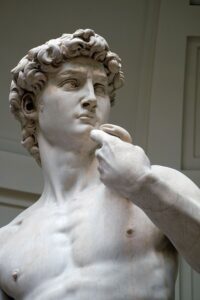
It’s almost a miracle that Michelangelo’s famous sculpture of David was created.
Before he was given the 17-foot block of marble, two other sculptors walked away from the narrow piece of marble because of its poor quality.
But Michelangelo had a vision for what this large block could become. He is attributed as saying:
“I saw the angel in the marble and carved until I set him free.”
Like Michelangelo’s belief in what the marble could become, the best leaders do the same with team members. This is often referred to as the Michelangelo phenomenon, and it is especially relevant for first-time leaders learning how to bring out the best in others.[1]
A skilled leader sees potential, then chips away to create the conditions for it to emerge.
In practice this could look like:
- communicating belief in someone’s capability
- giving stretch opportunities
- offering encouragement and developmental feedback.
Belief in work we do
A leader’s job is to deliver belief.
Belief in oneself, belief in others and belief in the work we do.
The best leaders are deeply committed to their belief in what they do. Everything they say links back to why the work matters. It is not just about pay. It is about being part of something bigger. Something that benefits others at scale. Something that inspires people to bring their best selves to work.
A leader’s belief in the work they do doesn’t just make people feel good. It shapes how teams perform and how culture is experienced day to day.
With trust in many institutions falling, people are looking for something meaningful to believe in and employers can play a powerful role in that.[2]
Finding certainty in uncertainty
Nothing is certain on the journey of parenthood.
But like Mr G, I believe in people’s potential.
Belief isn’t blind optimism. It’s faith in our capacity to keep going, even when things are uncertain.
And that’s a potent elixir for success.
How can I help?
1. Free leadership insights and practical tips
Explore practical ideas to help you lead and navigate change with greater confidence and clarity. Read more here.
2. Book a complimentary clarity session
Becoming a leader for the first time doesn’t come with a manual. If you’re learning how to lead people, manage competing demands, or build confidence in your role, let’s have a conversation. Together we’ll explore your goals, discuss the challenges you’re facing, and identify practical next steps in a no-obligation conversation.